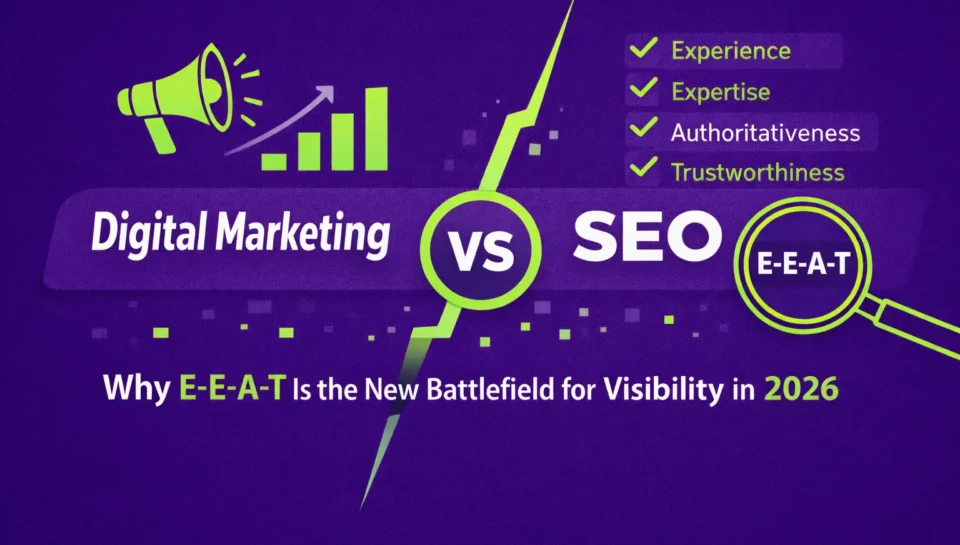
Digital Marketing VS SEO: Why E-E-A-T Is the New Battlefield for Visibility in 2026
What is the secret of SEO? Why invest hundreds and thousands of dollars, not getting results? If being a small business owner you have ever asked these questions, it means that you are on this blog for a reason. The landscape of Digital marketing, including the use of SEO, has completely transformed, and 2026 is coming with new and fierce challenges. Today, we explore Digital marketing vs SEO not just from the theoretical perspective, but in other spectrums also including ROI, cost, and more. Let’s dive into the sea of Digital marketing.
What is SEO?
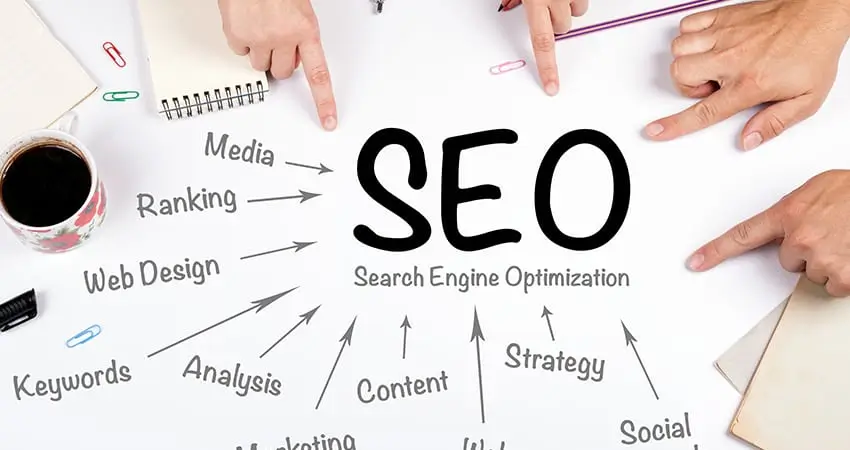
SEO stands for Search Engine Optimization is a practice and technique that helps search engines understand a website.
Role of SEO in Digital Marketing
The technique of SEO involves the optimization of a website, resulting in improved ranking on (SERPs), mainly for organic (non-paid) searches. This includes the implementation of core SEO components effectively.
- Keyword Research and Selection: It is the process of analyzing and finding terms and phrases used by the targeted audience to find a product or service.
- On-page SEO: It involves optimization of content and HTML elements, primarily making the website more relevant for users and search engines.
- Technical SEO: It involves focusing on the infrastructure of the website to ensure that it will be crawled, indexed, and provide an exceptional user experience.
- Off-page SEO: It includes the building of a website’s authority and credibility through the techniques of backlinks, brand mentions, and social media activity.
- Content optimization aligned with user intent: Refining the website content to increase the relevance, visibility, and accessibility to both users and search engines.
How SEO drives Long-term and organic Traffic
By implementing the core competencies, resulting in improving the website’s visibility and credibility, the steady flow of relevant users gets started without ongoing costs. For businesses looking to build sustainable organic growth, professional SEO Services provide the foundation for long-term visibility and authority in search results.
Digital Marketing vs SEO
1. Scope
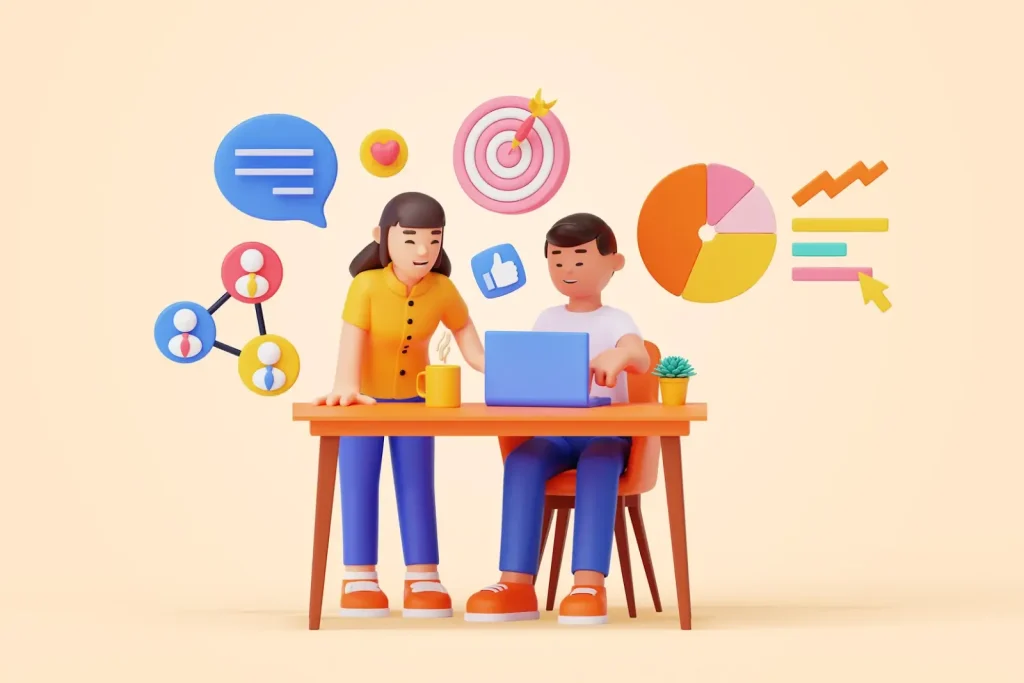
- Digital marketing is an umbrella term including online marketing aspects of pay-per-click (PPC), content marketing, advertising, social media marketing, emails, and SEO.
- SEO is a specific strategy within the domain of digital marketing with the primary goal of optimizing a website for search engines.
2. Goal
- The goal of digital marketing is to build an overall brand awareness and presence leading to online conversions.
- SEO aims to increase organic website traffic, rankings, and attract relevant users through keywords.
3. Channels and Tactics
- Digital marketing involves multiple channels, including special media platforms, search engines, email, websites, etc.
- SEO focuses mainly on search engine algorithms and user behavior, as well as the performance of the website.
4. Time Frame
- Digital marketing offers the execution of strategies that give immediate results, such as PPC.
- SEO technique is a long-term strategy that might take months to a complete year to deliver results.
To achieve faster reach alongside sustainable growth, many small businesses partner with expert digital marketing services that combine paid strategies with organic optimization.
Digital Marketing vs SEO Cost Comparison
Digital marketing cost involves various strategies, including PPC, social media marketing, and email marketing, to achieve the desired results. The price for each strategy is different and can have high and upfront costs, but it delivers results quickly.
In comparison, SEO involves keyword research, site structure optimization, and search engine rankings development, with the SEO cost required for tools and expertise for the optimization. This will result in long-term and sustainable traffic, leading to a continuous brand authority development without continuous payment.
Digital Marketing vs SEO for Small Business
Both the strategies of digital marketing and SEO can play a significant role in business development for the smallest startups. If the business requires getting noticed quickly, they can implement strategies like paper click digital marketing and other advertising tools through various promotional channels.
However, for long-term sustainable growth, if it is the aim of the small business, then SEO would be more suitable.
Digital Marketing vs SEO Pros and Cons
| Aspect | Digital Marketing | SEO |
| Pros | Quick lead generation; targeted campaigns; scalable reach | Sustainable traffic builds authority and trust; cost-effective, long-term |
| Cons | Expensive ongoing costs; temporary visibility | Slower to yield results; requires constant optimization |
| Best Use Cases | Launch campaigns, brand awareness, sales events | Organic visibility; reputation building; content authority |
Digital Marketing vs SEO: 2026 Trends
Digital Marketing Trends (2026)
- AI-Driven & Hyper-personalized: the era of simple automation is gone, and through AI, more hyper-personalized customer journeys will be introduced.
- Impressive Experiences: The engagement can now be derived through the short-form video with a focus on AR/VR.
- Data Privacy and Ethics: Ethical marketing will prevail with the focus on importance and compliance with data privacy regulations.
SEO Trends (2026)
- Authoritative Content & E-E-A-T: It includes building trust through providing high-quality and original content, demonstrating expertise, experience, and authoritativeness and trustworthiness.
- Focus on User Intent: With the elimination of keyword stuffing, the shift is coming for the implementation of user-driven content.
- Format first strategy: The focus in SEO is now on various formats, including FAQs, experts’ commentary, and AI summaries.
Digital Marketing vs SEO Return on Investment (ROI)
Digital marketing Return on Investment (ROI) incorporates all the efforts involved, including SEO. On the other hand, SEO ROI specifically is the measure of value generated through SEO activities.
How to Integrate Digital Marketing and SEO for Best Results
There are various methods through which one can integrate Digital marketing strategies and SEO techniques. One method is to focus on keyword research, content strategy, and building high-quality backlinks. This will promote the content across the platform by increasing authority.
Another way to integrate Digital marketing and SEO for the best results is to align PPC and SEO. In this way, the content will dominate the search results. Keep track of KIPs to analyze the conversion rates.
Conclusion
In conclusion, Digital marketing is the bigger domain in which SEO falls. However, with the rapid growth of SEO, it now has its own landscape. As small businesses in the US and around the globe desperately want to grow their business in 2026; understanding digital marketing vs SEO the executing both through effective alignment is needed. Focusing on business goals and executing strategies, including E-E-A-T or leveraging AR/VR, will definitely grow the business exponentially. It is recommended that US businesses evaluate their current status and, through an aggressive plan, explore the new horizons of Digital marketing and SEO.
FAQs
1. What delivers better ROI, Digital marketing or SEO?
Both deliver effective results based on their specific aim.
2. Can SEO replace paid marketing campaigns?
As Digital marketing, including paid marketing campaigns and SEO, serves different primary purposes, SEO generally cannot fully replace paid marketing campaigns.
3. How to measure success for SEO and digital marketing?
To measure digital marketing SEO success, it is crucial to define key performance indicators that are tied to business goals.
4. What skills should US businesses hire?
It is recommended for the US small businesses to hire individuals with the skills of problem-solving, critical thinking, communication, and teamwork.
5. How much budget is needed for effective campaigns?
The ideal budget needed for an effective campaign is 5-25% of the projected revenue.