hello@synaryverse.com
Why Brands Are Using AI UGC Video Ads: Compare AI Avatars & the Best AI UGC Tools

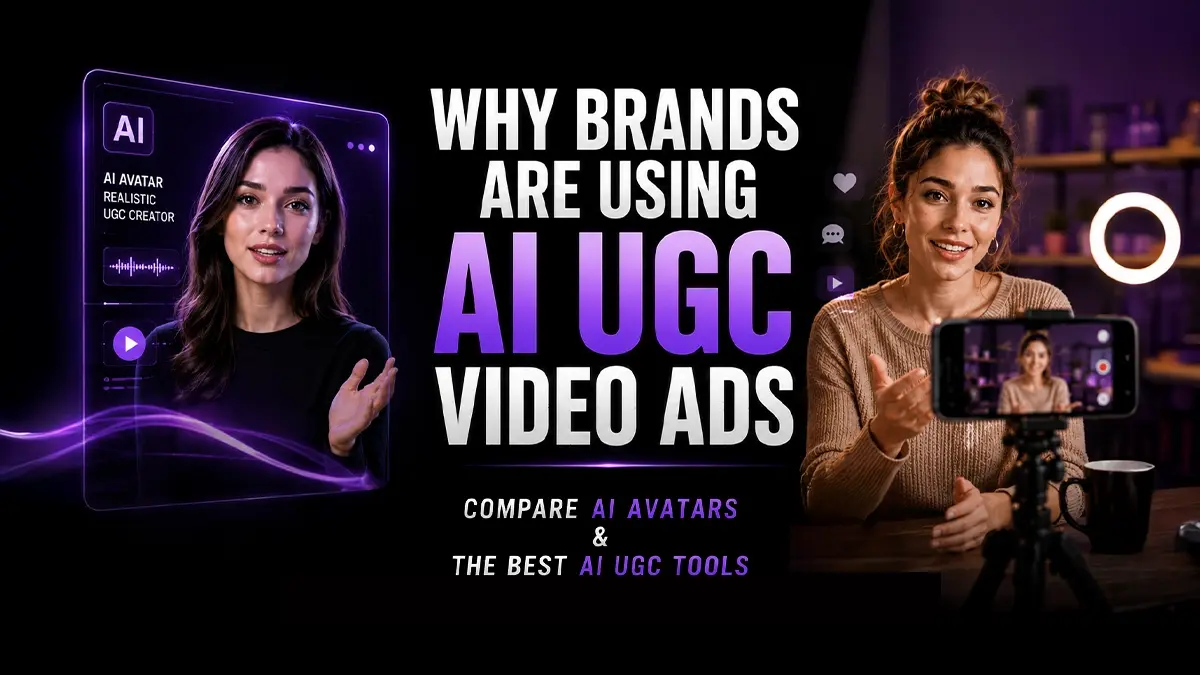
The way brands create video ads has changed dramatically over the last few years. While traditional video production still has an important place in marketing, many businesses are now turning to AI video ads to produce content faster, test more creative ideas, and scale campaigns across multiple platforms.
From startups launching their first product to enterprise brands running global campaigns, AI-generated user-generated content (UGC) is becoming a valuable addition to the modern marketing toolkit. It allows teams to create authentic-looking videos using AI avatars, realistic voiceovers, and automated editing, without relying on lengthy production schedules or the availability of content creators.
What Are AI UGC Video Ads
AI UGC video ads are marketing videos created with artificial intelligence that are designed to look and feel like authentic customer or creator content. Instead of hiring influencers or filming real users, brands use AI-powered platforms to generate realistic videos.
Unlike traditional commercial advertisements, AI UGC videos are intentionally casual and conversational. They mimic the style audiences expect on platforms like TikTok, Instagram Reels, Facebook, and YouTube Shorts, making them feel more native to the viewing experience.
Traditional UGC features real customers or creators sharing genuine experiences, and influencer marketing relies on established personalities promoting products to their audiences. On the other hand, AI UGC uses AI avatars or digital presenters to recreate the style of creator content while allowing brands greater control over messaging, production, and scalability. General AI video generation may include animations, cinematic scenes, or explainer videos, whereas AI UGC focuses specifically on creator-style advertising.
Why More Brands Are Switching to AI UGC Video Ads
The rapid adoption of AI UGC isn’t driven by hype alone. There are various factors that contribute to its success.
Faster Creative Production: Traditional video production can take days or even weeks. With AI UGC tools, marketers can move from script to finished video in a matter of hours. This speed allows businesses to act quickly and reduce missed opportunities.
Lower Production Costs: Producing high-quality videos typically involves multiple expenses. AI significantly reduces many of these costs by automating large parts of the production process.
Unlimited Creative Variations: Instead of creating one advertisement and hoping it performs well, marketers can generate multiple versions by changing hooks, headlines, voiceovers, languages, etc.
Global Localization: Expanding into international markets traditionally requires hiring new creators, translators, and production teams. AI UGC tools simplify this process by supporting multilingual voiceovers, localized scripts, and region-specific AI avatars.
Continuous Creative Testing: Creative fatigue damages audience responsiveness. AI enables marketing teams to generate new creative variations quickly, helping campaigns maintain engagement and improve metrics such as click-through rate (CTR), conversion rate, and return on ad spend (ROAS).
AI Avatars vs Human UGC Creators
A common misconception is that AI avatars will completely replace human creators. In reality, the two serve different purposes, and the best-performing brands often use both strategically.
Factor | AI Avatars | Human UGC Creators |
Cost | Lower long-term production cost | Higher per campaign |
Production Speed | Minutes to hours | Days to weeks |
Scalability | Excellent | Limited by creator availability |
Localization | Easy to translate into multiple languages | Requires separate creators |
Brand Consistency | Highly consistent | Varies by creator |
Authenticity | Improving rapidly but still synthetic | Naturally authentic |
Personal Connection | Moderate | High |
Best Use Cases | Paid ads, testing, product demos, multilingual campaigns | Brand storytelling, testimonials, influencer partnerships |
When AI Works Best
AI avatars are particularly effective when businesses need to produce a high volume of creative assets.
Examples include:
Ecommerce product advertisements
SaaS demonstrations
App promotions
Retargeting campaigns
A/B testing multiple creative concepts
Multilingual advertising
Evergreen paid social campaigns
When Human Creators Still Win
There are situations where genuine human experiences remain difficult to replicate.
For example:
Personal testimonials
Emotional brand stories
Lifestyle campaigns
Community-driven content
Influencer collaborations
Luxury branding
Consumers often connect more deeply with real people sharing authentic experiences, especially when trust and emotional engagement are central to the campaign.
How AI UGC Video Ads Are Actually Produced
AI UGC ad creation is not as simple as typing a prompt and receiving a high-converting advertisement. In reality, successful AI video ad creation follows a structured process.
A typical workflow looks like this:
Define the campaign objective: Whether the goal is brand awareness, lead generation, app installs, or ecommerce sales, the objective influences every creative decision.
Understand the target audience: Identify their pain points, motivations, and the platforms where they’ll see the ad.
Write a conversion-focused script: Strong AI videos still rely on human-written messaging. The first few seconds should capture attention, followed by a clear value proposition and compelling call to action.
Choose an AI avatar or digital presenter: Select an avatar that aligns with your audience and brand personality, or use a custom brand avatar for consistency.
Generate realistic voiceovers: Use natural-sounding AI voices that match your brand tone and language.
Add real product visuals: Combine AI presenters with actual product footage, screen recordings, customer photos, or demonstrations to increase credibility.
Edit for a native social experience: Include captions, fast-paced cuts, music, and platform-specific formatting for TikTok, Instagram Reels, or Meta Ads.
Launch and test: Publish multiple versions simultaneously and measure performance.
Optimize continuously: Replace underperforming creatives, test new hooks, and refine messaging based on campaign data.
Best AI UGC Tools Compared
Tool | Best For | Strengths | Considerations |
Arcads | Performance marketing | Built specifically for AI UGC ads, quick testing, and ecommerce creatives | More focused on paid ads than broader video production |
Creatify | Ecommerce brands | Product-focused templates, URL-to-video generation, fast ad creation | Less flexibility for complex storytelling |
HeyGen | Marketing teams & global brands | Highly realistic AI avatars, multilingual support, custom avatars | Premium features may require higher-tier plans |
Synthesia | Enterprise & corporate communications | Professional avatars, training videos, multilingual presentations | Better suited for business content than casual UGC |
Captions | Content creators & social media teams | Mobile-friendly editing, AI voice enhancement, automatic captions | Primarily designed for creator workflows rather than enterprise campaigns |
How to Choose the Right AI UGC Tool
With dozens of AI video platforms available, selecting the right one can feel overwhelming. Rather than comparing feature lists, evaluate tools against your long-term marketing needs.
Consider the following questions:
Does the avatar look natural and believable?
Are the AI voices realistic enough for customer-facing campaigns?
Can you create a custom brand avatar?
Does the platform support multiple languages?
Can you easily edit scripts, scenes, and captions?
Does it integrate with your existing creative workflow?
Does it offer commercial licensing for business use?
Can your team collaborate efficiently?
Will it scale as your advertising volume grows?
It’s also worth testing a few platforms before committing. Most leading AI UGC tools offer free trials or limited plans, allowing marketing teams to compare output quality before investing.
Best Practices for AI UGC Video Ads That Convert
AI video ad generators make video creation faster, but speed alone doesn’t guarantee performance. High-converting AI UGC ads still rely on proven marketing principles.
Start With a Strong Hook
The first three seconds determine whether viewers continue watching. Ask a question, highlight a common problem, or lead with an unexpected statement to capture attention immediately.
Write Like a Real Person
Avoid scripts that sound overly polished or corporate. The best-performing UGC ads feel conversational and relatable, even when generated by AI.
Use Real Product Footage
AI avatars build consistency, but real product demonstrations increase trust. Showing the actual product in use helps bridge the gap between synthetic presenters and authentic customer experiences.
Refresh Creatives Regularly
Creative fatigue affects almost every advertising campaign. Develop multiple versions of your ads with different hooks, visuals, and calls to action so fresh content is always ready to test.
Keep Humans in the Loop
AI can accelerate production, but it shouldn’t replace human judgment. Review every script, verify factual claims, ensure branding consistency, and refine the creative before publishing.
This combination of AI efficiency and human oversight consistently delivers stronger results than relying on automation alone.
Conclusion
AI UGC video ads have become much more than a cost-saving alternative to traditional production. They represent a faster, more scalable way for brands to create, test, and optimize advertising across today’s most competitive digital channels.
The biggest advantage of generating videos with AI is the ability to continuously experiment with creative ideas, localize campaigns, and respond quickly to changing customer behavior. That’s why more ecommerce brands, SaaS companies, and marketing teams are making AI UGC a core part of their advertising strategy.
However, AI services work best when paired with human expertise. Strong campaign strategy, persuasive copywriting, thoughtful creative direction, and ongoing performance analysis remain essential for producing ads that genuinely connect with audiences.
As AI video technology continues to advance, the brands that succeed won’t be those using the most automation. They’ll be the ones using AI strategically - to empower creativity, accelerate testing, and deliver better customer experiences at scale.
FAQs
What are AI UGC video ads?
+
AI UGC video ads are user-generated-style advertisements created by artificial intelligence rather than human creators. They use AI avatars, synthetic voices, and automated editing to produce authentic-looking videos for platforms like TikTok, Instagram Reels, Facebook, and YouTube Shorts.
Are AI UGC video ads as effective as real creator videos?
+
AI UGC video ads can perform just as well for product demonstrations, paid social campaigns, and creative testing. However, real creators often deliver stronger emotional storytelling and personal testimonials. Many brands achieve the best results by combining AI-generated content with human UGC.
What are the best AI UGC tools for businesses?
+
Some of the leading AI UGC tools include HeyGen, Arcads, Creatify, Synthesia, and Captions. The right choice depends on your needs, such as ecommerce advertising, multilingual videos, custom AI avatars, or enterprise-scale video production.
Can AI avatars replace influencers and UGC creators?
+
Not entirely. AI avatars are ideal for producing scalable, cost-effective advertising and testing multiple creative variations. Influencers and real creators remain valuable for building trust, sharing authentic experiences, and strengthening long-term brand relationships.
How do brands use AI UGC video ads in marketing?
+
Brands use AI UGC video ads to create product promotions, social media ads, retargeting campaigns, app demos, and localized marketing content. AI helps marketers produce videos faster, test more creative concepts, and scale campaigns across multiple audiences while maintaining consistent branding.