 hello@synaryverse.com
UGC Ads: What They Are, How to Create Them, and How Brands Use UGC

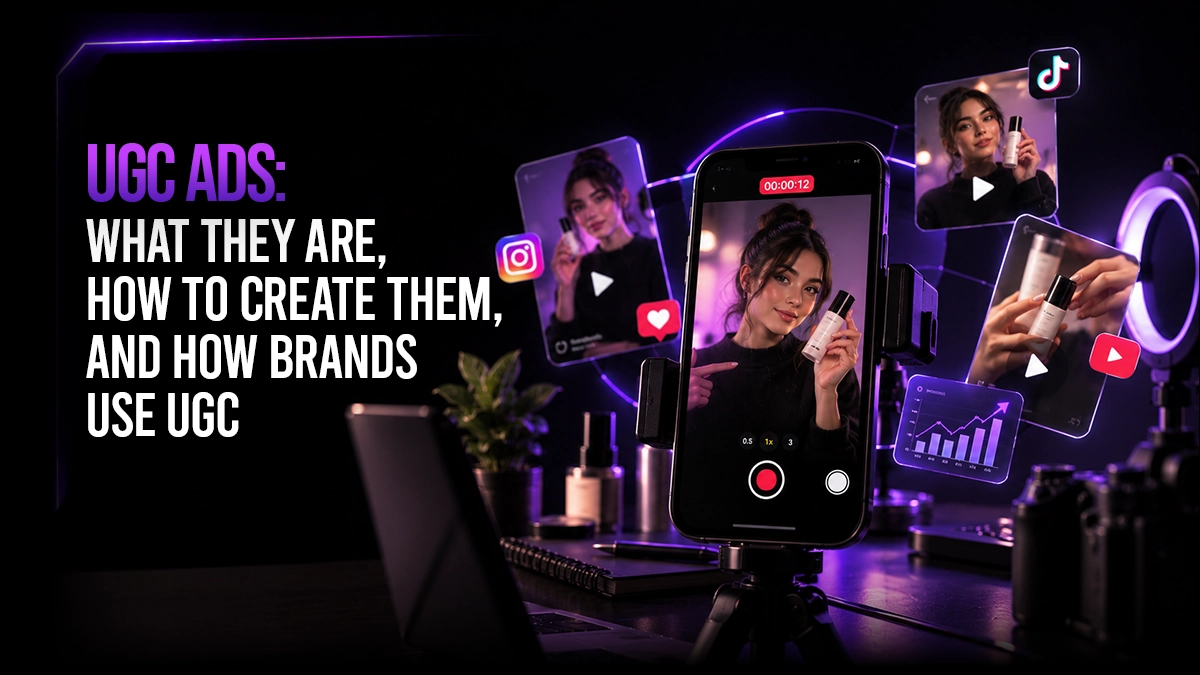
Scroll through TikTok or Instagram for a minute, and you'll probably hit an ad that doesn't look like one. Someone talks into their phone camera, holds up a product, and tells you why it works for them. That's a UGC ad, and it has become one of the most common formats in paid social. The reason is simple: people trust people more than they trust polished campaigns.
What Are UGC Ads?
UGC ads are paid social ads built from user-generated or creator-made content: reviews, demos, testimonials, and everyday clips that feel native to the feed. The brand funds that content, chooses the audience, and measures results like any other ad creative.
They look different because they borrow the grammar of social media. Vertical framing, natural light, a person speaking straight to camera, quick cuts. Nothing about it says "commercial," which is exactly why people watch.
One clarification matters, though. UGC-style doesn't always mean unpaid or customer-created. Most UGC ads today are made by paid UGC creators who produce content on brief, often without ever posting it to their own profiles. Brands can use UGC video ads services to produce creator-style content for their paid social campaigns.
UGC vs. Organic UGC vs. UGC Ads
These terms get used interchangeably, but they describe different things.
Content type | Purpose | Distribution |
Organic UGC | Community and social proof | Organic |
Creator UGC | Content made for the brand to use | Organic or paid |
UGC ads | Advertising and performance | Paid |
Put simply: organic UGC happens on its own, creator UGC is commissioned, and either becomes a UGC ad the moment money goes behind it.
What Makes a UGC Ad Effective?
The shaky camera isn't what makes these ads work. The structure underneath is.
A hook in the first two seconds. A bold claim, a relatable frustration, or the product doing something unexpected.
A clear problem or use case. Viewers should know quickly who this is for.
The product in action. Showing beats describing, every time.
One specific benefit. "Dries in ten minutes" lands harder than "amazing quality."
Proof or lived experience. A result, a comparison, or a short story about actually using it.
A natural CTA. Something the creator would plausibly say, not a shouted sales line.
How to Create a UGC Ad
Most teams follow some version of this workflow:
Brief. Define the audience, the core message, required claims, and anything off-limits.
Creator or concept. Match the creator to your customer, not just to follower counts.
Hook and script. Write several hooks, then a loose script that sounds spoken rather than read.
Product integration. Plan when and how the product appears on screen.
Recording and editing. Keep it raw enough to feel real but tidy enough to follow, with captions on.
Brand review. Check claims, visuals, and tone against your guidelines.
Variations and launch. Cut alternate hooks, lengths, and CTAs so you can A/B test before scaling.
That last step is where much of the performance comes from. One solid creator video can easily become five or six ads.
UGC Ad Formats Brands Can Use
A handful of formats keep showing up because they mirror how people actually make buying decisions:
Product review: an honest-sounding take on what's good and what isn't.
Testimonial: a customer or creator explaining the result they got.
Unboxing: first impressions, packaging, and what's inside.
Problem/solution: open on the pain point, then introduce the fix.
Product demonstration: a close look at how it works.
"3 reasons why…": easy to follow and easy to test.
Before/after: powerful for visible results, but only where the claim holds up.
Founder or creator recommendation: a personal endorsement with a story behind it.
How Brands Use UGC Ads Across the Customer Journey
UGC isn't only a bottom-of-funnel trick. The same format does different jobs depending on where the viewer is.
Awareness: entertaining, hook-led clips that introduce the product to cold audiences.
Product education: demos and how-tos that explain what the product actually does.
Consideration: reviews and comparisons that answer "is it worth it?"
Conversion: testimonials paired with a clear offer and direct CTA.
Retargeting: content that tackles lingering doubts about sizing, results, or delivery.
Planning this way leaves you with a creative library where every piece has a role, instead of a pile of near-identical videos.
UGC Ads for Ecommerce Brands
Product-led businesses are a natural fit. When shoppers can't touch an item, watching a real person use it does a lot of the selling. Creator demos, lifestyle scenarios, and quick reviews answer questions a product page often can't. For stores producing creative at volume, it pairs well with scaling AI video ads for ecommerce brands.
Can AI Be Used to Create UGC Ads?
There is an increasing trend of brands using AI UGC video ads, which works best as a support system. AI can help with script and hook variations, creative concepts, visual production, AI presenters or avatars, and faster editing and resizing.
UGC Ads vs. Traditional Brand Ads
Traditional brand ads are produced by the brand, with tight scripting and a polished finish. UGC ads are creator-led and conversational. Neither wins across the board. Brand ads build identity and long-term recall, while UGC tends to shine when the goal is trust, explanation, or a quick response. Most mature advertisers run both.
What Brands Should Check Before Running UGC Ads
This is the step teams tend to rush, and it's the one that causes trouble later.
Creator rights and licensing. Agree in writing where the content can run, for how long, and whether it can be edited into new ads.
Creator authorization. Running ads through a creator's handle, such as Meta's partnership ads (formerly branded content ads), requires the creator to grant access through the platform's own tools.
Disclosure. Under the FTC's Endorsement Guides, any material connection, including payment or free product, must be disclosed clearly. In video, that means inside the video, not just the caption.
Product claims and accuracy. Advertisers can be liable for misleading statements their endorsers make, so every claim needs backing.
Brand guidelines and platform rules. Check tone, visuals, and each platform's ad policies.
Creative variations. A single cut leaves you nothing to test.
Conclusion
UGC ads work because they look and sound like the people your customers already listen to. For most brands, the hard part isn't understanding that. It's producing enough good creative, consistently, to keep campaigns fresh. Structured production helps here, and our AI Video Ads Production Services are built to deliver creator-style ads at the pace paid social demands.
FAQs
What are UGC ads?
+
Paid social ads that use creator-style or customer content, such as reviews, demos, and testimonials, instead of studio-produced footage.
Are UGC ads actually made by customers?
+
Sometimes, but usually not. Most are produced by paid UGC creators working from a brand brief.
Which platforms work best for UGC ads?
+
Short-form video platforms like TikTok, Instagram Reels, Facebook, and YouTube Shorts, where native-looking content blends into the feed.
Do UGC ads need a sponsorship disclosure?
+
Yes, whenever there's a material connection like payment or free product. The disclosure should be clear and visible within the ad itself.
How many variations should a brand test?
+
There's no fixed number, but testing several hooks per concept is a sensible start before putting more budget behind a winner.

