 hello@synaryverse.com
Why Should a Local Business Invest in Local SEO in 2026?

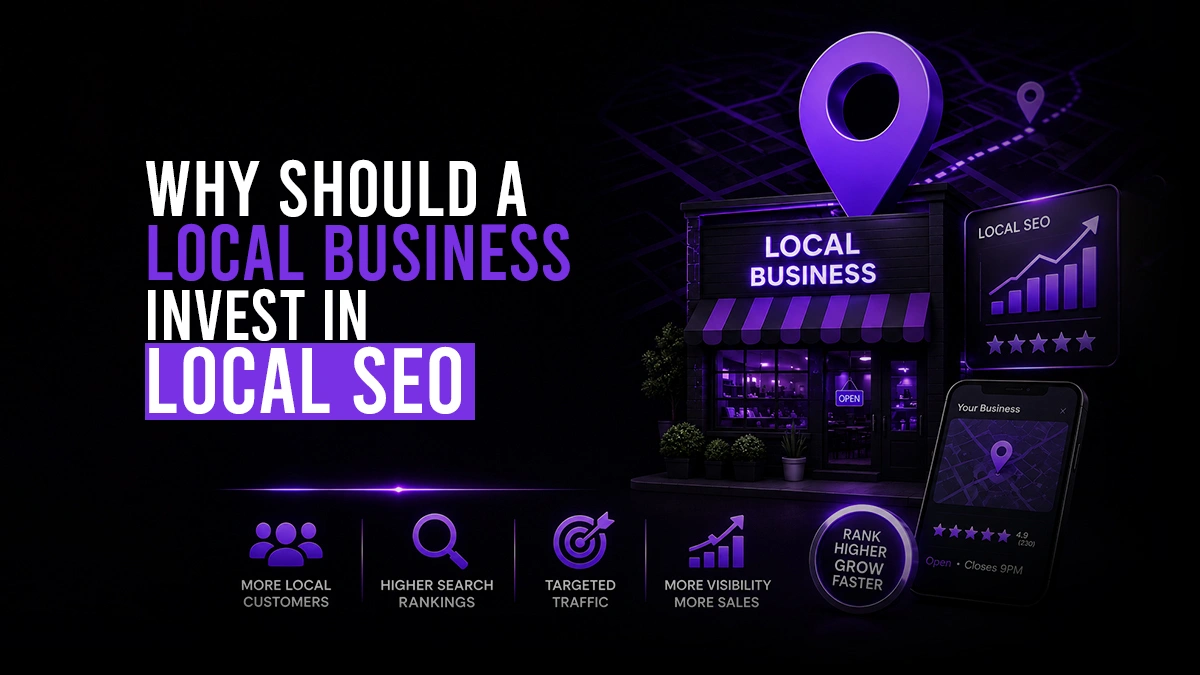
For a local business, Local SEO is no longer a marketing tactic or simply about ranking higher on Google. It is about being discoverable wherever customers search for nearby products and services. In 2026, that journey may start on Google Search, Google Maps, an AI-generated result, or a mobile search made minutes before a purchase.
Investing in Local SEO Services helps businesses strengthen visibility across these touchpoints while building something paid advertising alone cannot provide: lasting digital authority. For small businesses competing within a specific city or service area, an effective Local SEO strategy can translate search visibility into calls, appointments, store visits, leads, and ultimately revenue.
Why Local SEO Matters More Than Ever in 2026
The way people search for local businesses is changing. For example, someone searching for a restaurant may want recommendations based on cuisine, location, reviews, opening hours, and occasion - all in one query.
Google’s AI Overviews and AI Mode are designed to handle more complex and conversational searches. Google for Developers says the same fundamental SEO practices that help websites perform in traditional Search remain relevant to visibility within these AI-powered experiences.
This does not mean traditional local search has disappeared. Google Maps, the Local Pack, organic listings, mobile search, and Google Business Profiles remain central to local discovery.
Google continues to explain local rankings primarily through relevance, distance, and prominence.
So, is Local SEO dead? Quite the opposite. The search environment has expanded. Businesses now need enough clarity, authority, and consistency online for both traditional search systems and newer AI-driven search experiences to understand who they are, what they offer, where they operate, and why customers should trust them.
How Local SEO Helps Businesses Generate More Customers and Revenue
Local SEO does not improve rankings instantly. It has a complete return chain which looks like this:
Visibility → Qualified Traffic → Calls or Enquiries → Leads → Customers → Revenue
Consider a law firm appearing when someone searches for an attorney in their city. A healthcare clinic may be discovered through Google Maps when a patient searches for urgent local treatment. A restaurant can turn a nearby mobile search into a same-day reservation. These are valuable searches because the customer is often more likely to take action than someone casually researching a broad topic.
A strong local presence also influences what happens after discovery. Google Business Profile information, website quality, opening hours, photographs, service descriptions, and customer reviews can all help a potential customer decide whether to contact one business instead of another.
Reviews are particularly important during this evaluation stage. BrightLocal’s 2026 Local Consumer Review Survey reports that 97% of surveyed consumers read reviews for local businesses, while Google remains one of the most widely used places for consumers to evaluate them.
Professional Local SEO Services therefore should not be measured solely by improvements in rankings. Instead, the number of qualified local traffic, calls, appointment requests, etc. is a better performance indicator.
What Should Local Businesses Invest in Besides Google Business Profile?
Google Business Profile optimization matters, but relying on GBP alone is one of the biggest weaknesses in many local SEO strategies. Modern Local SEO strategy should treat a business’s entire digital presence as an interconnected ecosystem.
Build a Website That Establishes Authority
Your website should make it easy for both customers and search engines to understand exactly what you do.
A law firm serving several practice areas, for example, should not force every topic onto one generic services page. Dedicated service pages allow the business to explain its expertise in greater depth and target relevant search intent. The same principle applies to other professional services and location-dependent businesses.
Create Useful Local Landing Pages
Businesses operating across several locations or service areas may benefit from dedicated local landing pages. Strong location pages should reflect meaningful local information: services available in that area, customer needs, relevant examples, service coverage, FAQs, directions where appropriate, and other information that demonstrates a real connection to the location.
Strengthen Entity Signals
Search engines increasingly need to understand businesses as identifiable entities rather than collections of keywords. That means maintaining consistent information about the business name, services, location, contact details, organization, and relationships between relevant pages and profiles.
Structured data can support that understanding. Google states that Organization structured data can help it understand administrative details about an organization and distinguish it from others, while LocalBusiness structured data can communicate information such as business details, hours, departments, and other attributes.
Improve Internal Linking and Topical Authority
A good local website should also connect related information intelligently. A dentist’s main cosmetic dentistry page might link to pages covering veneers, teeth whitening, dental bonding, relevant FAQs, and its location page. Those connections help visitors navigate while giving search engines clearer context around the site’s areas of expertise.
Fix Technical SEO
Slow pages, poor mobile usability, indexing problems, duplicate pages, broken internal links, and confusing site architecture can undermine otherwise strong content.
That is why businesses often need broader SEO Services alongside profile optimization. A complete Local SEO program brings technical SEO, content, website authority, entity consistency, reputation signals, and Google Business Profile optimization together rather than treating each as an isolated tactic.
Local SEO vs Paid Advertising: Which Delivers Better Long-Term ROI?
Local SEO and paid advertising solve different problems, and many businesses benefit from using both.
Local SEO | Paid Advertising |
Builds long-term search visibility | Can provide visibility almost immediately |
Can strengthen trust and authority | Can quickly reach targeted audiences |
Organic visibility can compound over time | Traffic generally depends on continued ad spend |
Improves organic and local search presence | Does not directly create lasting organic rankings |
Often reduces reliance on paid acquisition over time | Useful for promotions, launches, and immediate lead generation |
Requires ongoing optimization and patience | Requires continuous budget and campaign management |
Google Ads can be extremely valuable when a business needs immediate visibility, wants to test a new market, or is targeting highly commercial queries.
Local SEO serves a different purpose. Content, authoritative service pages, strong reviews, relevant links, technical improvements, and an established local presence can continue contributing to organic visibility over time. That makes SEO closer to building a digital asset than simply purchasing traffic.
The strongest customer acquisition strategy is therefore not necessarily “SEO versus PPC.” A business may use paid search to generate demand today while building organic visibility that reduces its dependence on paid acquisition tomorrow.
Signs Your Business Should Invest in Local SEO Now
Not every company needs the same Local SEO investment, but there are clear signs that a business is leaving opportunities on the table.
Consider prioritizing Local SEO if:
Competitors consistently appear above you. Customers searching for your services are repeatedly finding competing businesses first.
You have weak Google Maps visibility. Your business rarely appears for relevant searches in the areas you serve.
You have too few recent customer reviews. A weak review profile can make competitors look more established and trustworthy.
Organic traffic is declining or stagnant. Existing pages may no longer satisfy current search intent or may lack sufficient authority.
You do not have proper service or local landing pages. Search engines have limited information connecting specific services with the locations you serve.
Your website performs poorly. Slow speed, mobile issues, indexing problems, or weak architecture can restrict organic growth.
Your business information is inconsistent online. Incorrect citations, outdated contact information, and conflicting business details can create confusion.
Your online reputation is weaker than your offline reputation. A great real-world business can still lose customers when its digital footprint fails to communicate the same level of trust.
Final Thoughts
Local SEO in 2026 is not simply about optimizing a Google Business Profile or adding a city name to a webpage. It requires building a trustworthy local entity across Search, Maps, your website, customer reviews, structured data, content, and the wider web.
As AI-powered search develops, that foundation becomes even more important. Google continues to emphasize established SEO fundamentals for visibility in its generative AI experiences rather than suggesting that businesses abandon traditional SEO for an entirely separate approach.
Synaryverse helps businesses build comprehensive Local SEO strategies that go beyond rankings - from Google Business Profile optimization and local content to technical SEO, entity signals, website authority, and conversion-focused search visibility. The objective is straightforward: help more of the right customers discover your business and give them a stronger reason to choose it.
FAQs
Is Local SEO still worth investing in in 2026?
+
Yes. Local SEO remains valuable because customers continue using Google Search, Google Maps, and AI-powered search to find nearby businesses. A strong local presence helps businesses improve visibility, trust, and customer acquisition.
How is AI changing Local SEO in 2026?
+
AI is making local search more conversational and recommendation-driven. Businesses now need clear service information, strong authority signals, reviews, and consistent online data to improve their chances of appearing in AI-powered and traditional search results.
Is a Google Business Profile enough for Local SEO?
+
No. Google Business Profile is important, but effective Local SEO also requires a strong website, service and location pages, technical SEO, reviews, structured data, internal linking, and consistent business information.
How long does Local SEO take to show results?
+
Results vary based on competition, location, website authority, and current SEO performance. Some improvements may appear quickly, but meaningful and sustainable local visibility usually develops through consistent optimization over time.
Do Google reviews really help Local SEO?
+
Yes. Reviews can strengthen local visibility while also influencing customer trust and purchasing decisions. A steady flow of genuine, positive reviews can make a business more competitive in both Google Maps and local search results.

